• Skip to main content
  • Skip to footer

Ann-Marie Cheung ARTIST

Joyful magical unique vibrant whimsical art for your heART

  • Home
  • About Ann-Marie
    • Artist Statement
    • Art Exhibitions
    • Reviews and Interviews
  • MUSINGS
    • ART MAGAZINE
  • Gallery
    • Landscape Design
    • Original Paintings
    • Prints
    • Books
  • Online Courses
  • Contact

work

London Arts Directory

I’m now listed in the London Arts Directory, check it out…

Click Here to view my profile

About Acrylic Paints

Stained Glass Doodle 2012 - acrylic on canvas
Stained Glass Doodle © 2012 Ann-Marie Cheung – acrylic on canvas

Acrylic paint comes in a tube, just like oil paint. However, since acrylic paint is water-based meaning it dissolves in water instead of oil-based (dissolves in oil or turpentine), it’s much easier to clean up after. You can soak your brushes and clean your hands in plain tap water, instead of smelly and flammable chemicals.

Another advantage to acrylic paint is that it dries much faster than oil paint. If you’re working on a painting that needs to be done on time, that’s important. Acrylic paint was developed as a water-based alternative to traditional oil paints.

Acrylic paints can be diluted with water, but become water-resistant when dry. Depending on how much the paint is diluted with water, the finished painting can resemble a watercolor or an oil painting.

Acrylic paint is a fast-drying paint containing pigment suspended in an acrylic polymer resin. Different from oil painting as watercolor is different from oil painting. There are techniques, which are available only to acrylic painters, and there are also restrictions, which are unique to acrylic painting.

Acrylic paints can achieve an oil-paint-like effect, and do so in much less time. Applied to look like oil paints, acrylics are somewhat limited due to the superior color range of oil paints, and the fact that acrylic dry to a shiny, smooth.

Acrylics paints are sometimes used in place of watercolors because acrylics dry closer to the desired color slightly darker, usually, while watercolors dry lighter and often unpredictably, especially for beginning artists.

Painted Floor Cloths

Floor cloths originated in France in the 1400s and were introduced to the American colonies in the early 1700s. Originally made from recycled ships’ sails, they were used to cover dirt or wooden floors in early American homes. Patterns including diamonds, squares and cubes were hand painted or stenciled, frequently by the lady of the house.

These cloths became known as “crumb cloths” when used under tables, but their use was not limited to dining areas. Because of their bright colors and interesting patterns, floor cloths were used as art in parlors, bedrooms and hallways.

Here’s a few Floor cloths that I’ve made…

Lizard Floor Cloth
Lizard Floor Cloth
Family Floor Cloth
Family Sunflower Floor Cloth
Floral Floor Cloth
Floral Floor Cloth

Some work in progress

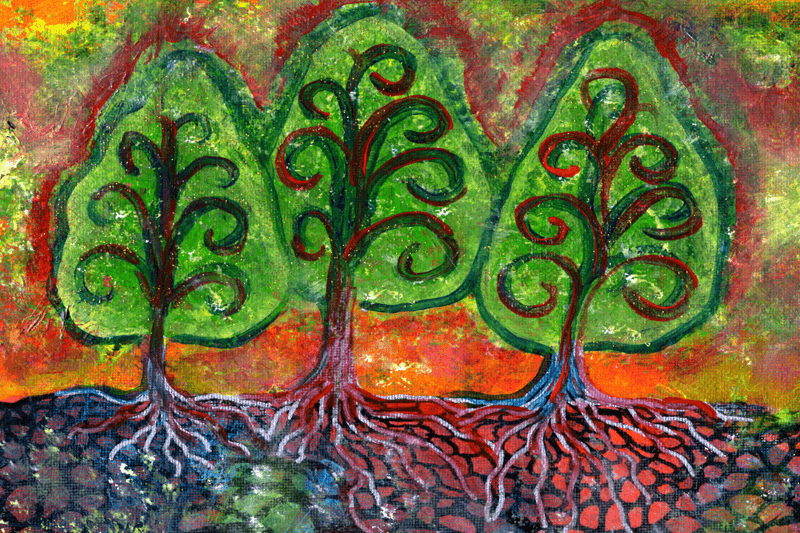
I’ve been exploring some Tree of Life concepts using acrylic on canvas… been really loving orange lately

« Previous Page

Footer

Connect on Social Media


Website Hosted by DreamHost

MORE

  • ART Canada Magazine
  • Customizable Gifts
  • Fine Art Prints
  • heARTsake Creative Adventures
  • Home Decor + More
  • Motion Graphic Design
  • One of a Kind Gifts
  • Unique T-Shirts

  • Home
  • About Ann-Marie
  • MUSINGS
  • Gallery
  • Online Courses
  • Contact
Loading…